The short answer
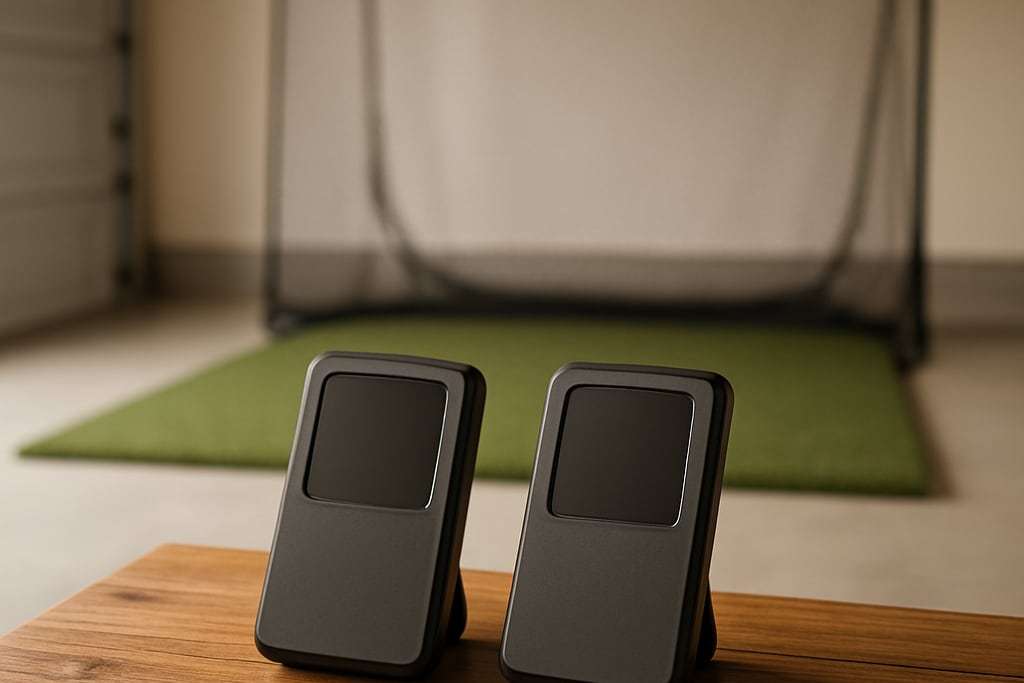
A net with a launch monitor is the cheaper, simpler start, and a SwingNet Pro net is $599. An enclosure with an impact screen costs more, from $999.95 for a Carl's Place kit, but it can show a projected course and surrounds the hitting area. Choose a net if you want numbers, and an enclosure if you want to see the course.
This comparison is based on published specs, retailer guides and maker documentation, not on our own ball striking. Read the safety section even if you only care about price.
The basic difference
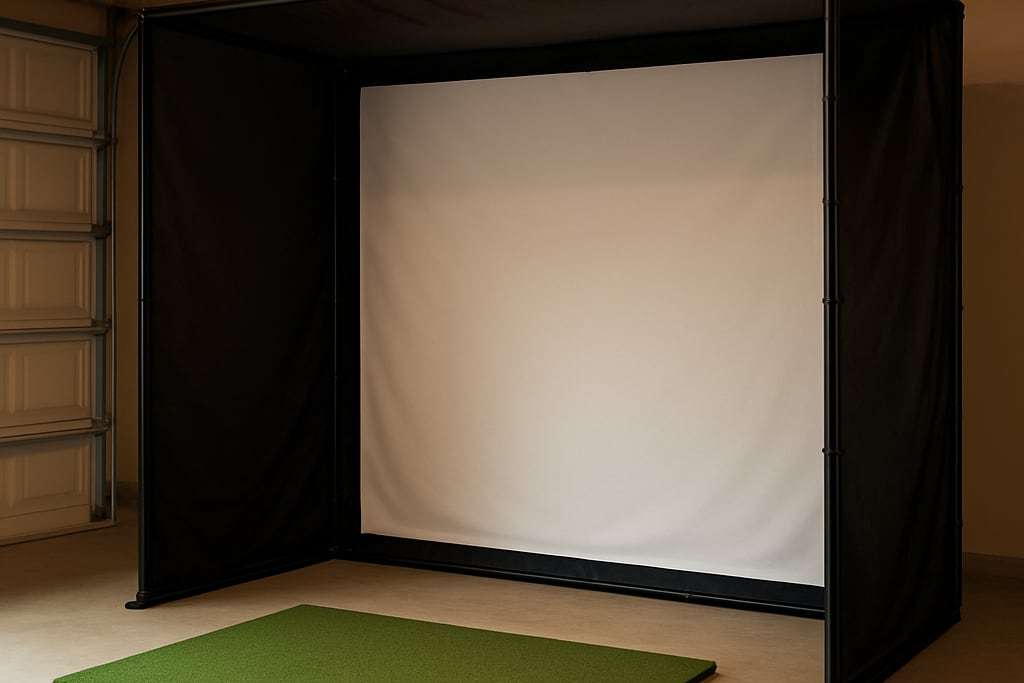
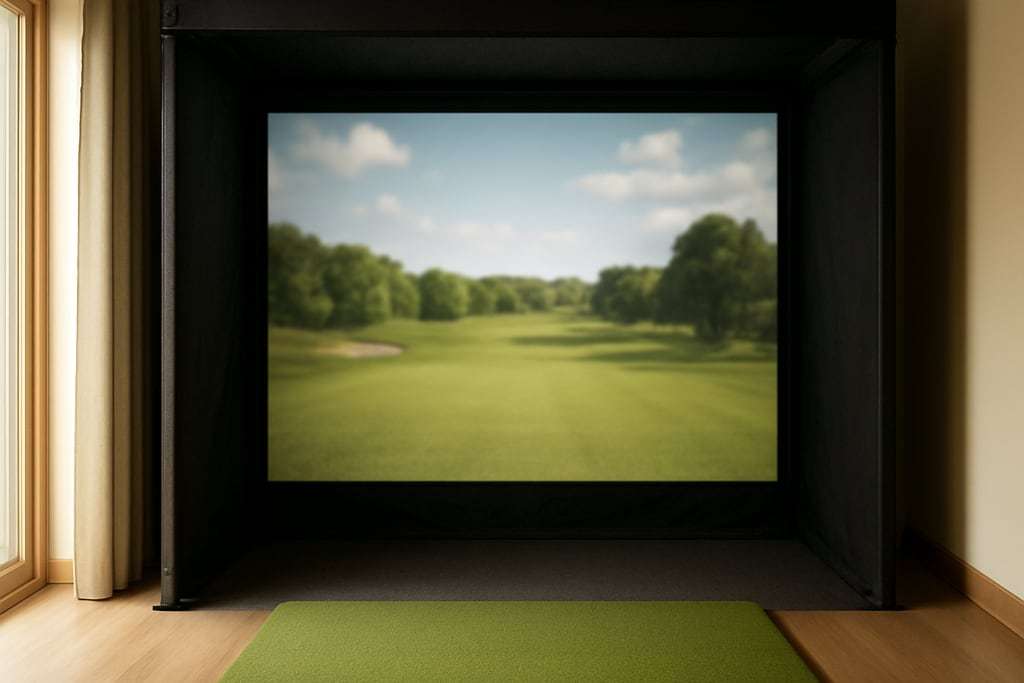
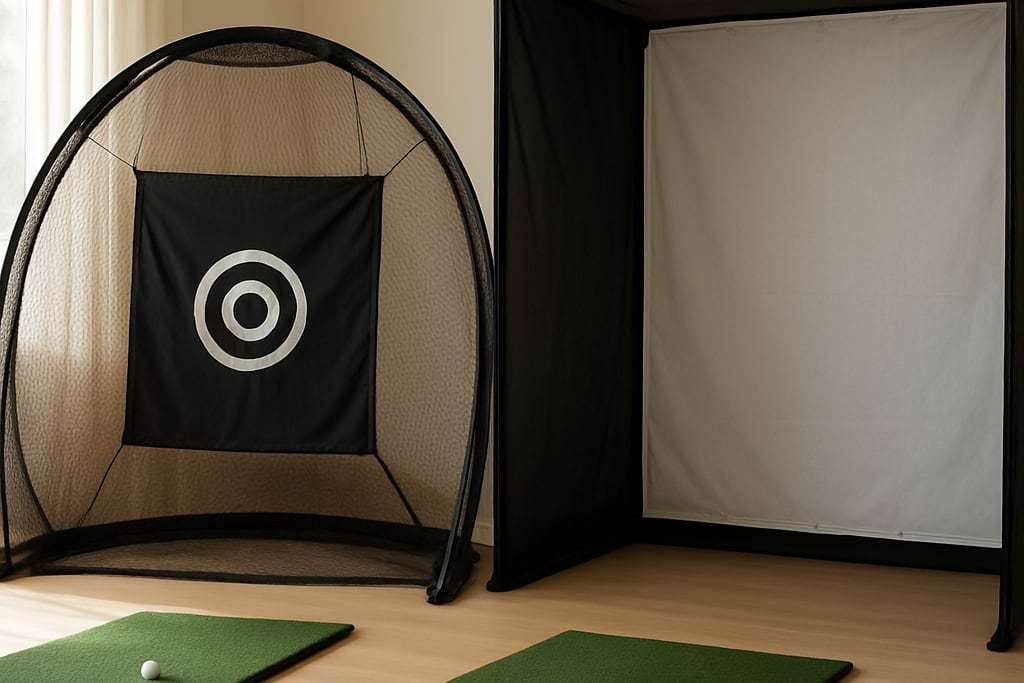
An impact screen is a taut fabric that stops the ball and doubles as the surface a projector shines on. A hitting net only stops the ball. It cannot show a projected image, so the course appears on a separate display.
Simply Golf Simulators describes the trade this way: net plus a monitor or TV is cheaper and simpler, while a projector and screen takes more parts and more room. Screens need grommets and frames, and they can tear.
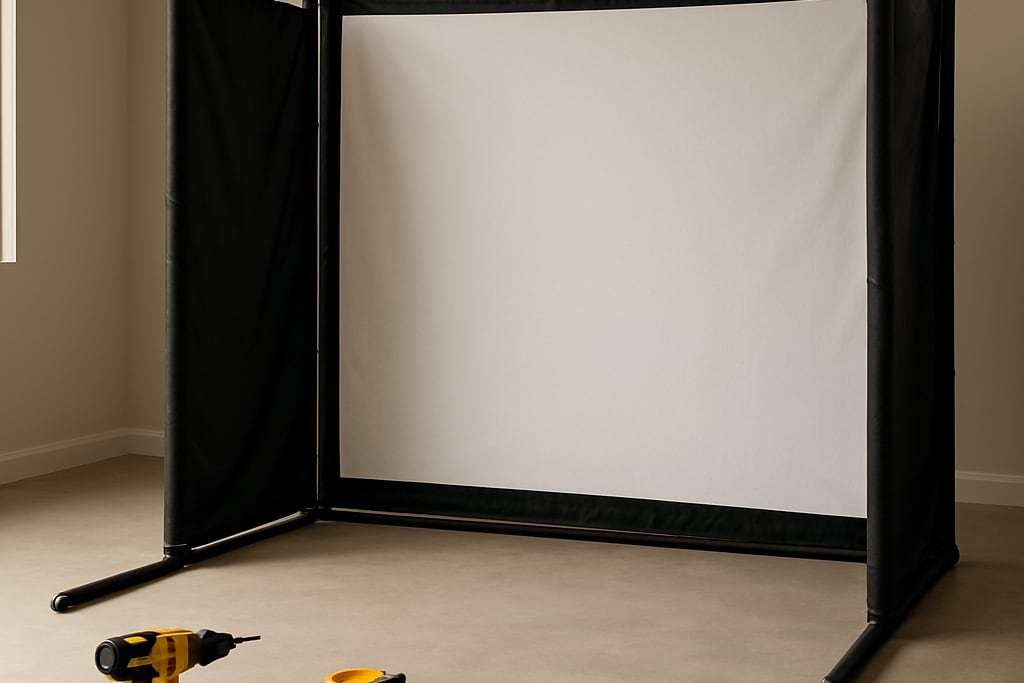
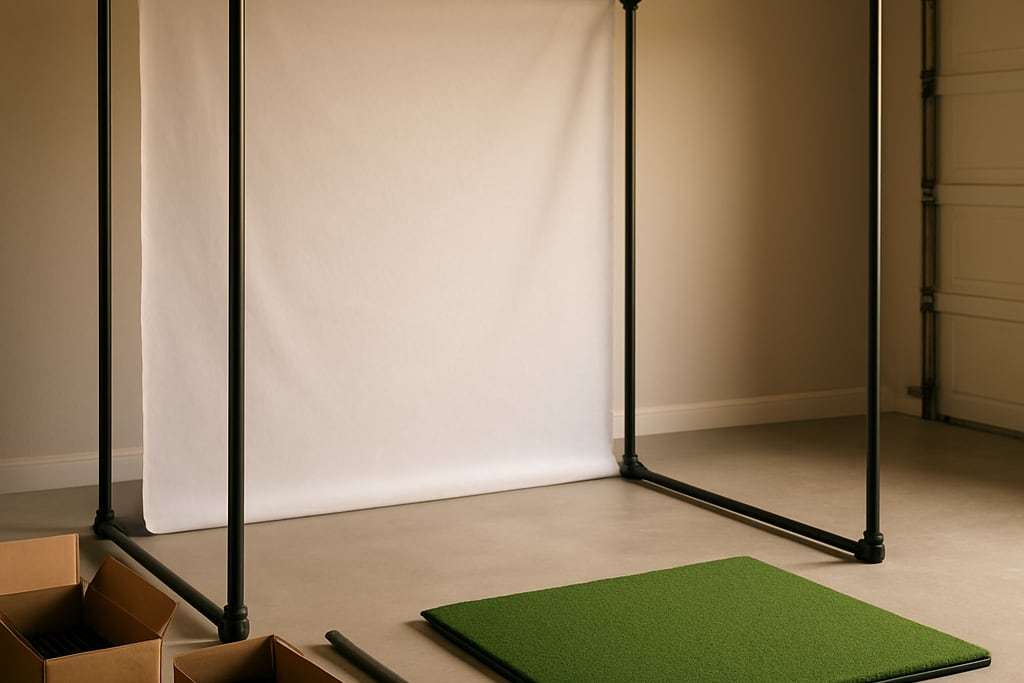
An enclosure is the frame and side panels that form a bay around the hitting area. Canvas Etc describes three screen styles: hanging (lowest cost), enclosure (steel or aluminum frame, the most durable and immersive) and retractable (a roll-up from the ceiling, manual or motorized).
Schematic, not to scale. A net only stops the ball; an impact screen stops it and shows the projection.
Picture quality
With a screen, you see a large course image in front of you, and the ball’s flight is drawn on it. With a net, you read the shot on a smaller display, usually a phone, tablet, monitor or TV. If you mostly want yardage, spin and launch numbers, a net does the job. If you want the experience of playing a course, you need a screen and a projector.
Projectors add cost. The BenQ AH30ST short throw projector is $1,499 and the Optoma GT2400HDR is $1,299. Our projector guide covers brightness and throw ratio. Only a screen-based setup needs one.
Cost: what each route adds up to
| Route | Starting price | What you get |
|---|---|---|
| SwingNet Pro XL 8x8 net | $599 | Portable net, tool-free assembly per the retailer |
| Garmin R10 Practice Bundle (Rain or Shine) | $1,599 | R10, SwingNet Pro XL net, SwingTurf mat |
| Mevo Gen2 Practice Bundle (Rain or Shine) | $2,149 | Mevo Gen2, net, mat |
| Carl’s impact screen alone | $179.95 | Screen only, you supply the frame |
| Carl’s DIY enclosure kit | $999.95 | Fabric enclosure and impact screen, pipe extra |
| Rain or Shine simDIY kit | $1,499 | Frame, screen and hardware |
| Rain or Shine SwingBay | $1,999 | Aluminum frame and screen |
The net bundles are practice setups, not full simulators, because they have no projector or screen. A screen route adds the enclosure and also the projector, and only then does the image look like a course. The cost guide adds these parts together.
Safety: the part not to skip
Every ball that does not hit the screen’s center goes somewhere. A forum builder who added acoustic foam to the ceiling reported a rebound hit to the stomach, and says any unprotected area will eventually get a stray shot, because sim data often makes people swing harder. That is one person’s experience, but it matches the general advice.
What the dealer guides suggest:
- Soft over hard. Hard objects such as support pipes are the main rebound hazard, so cover them. Soft coverings keep rebounds weak.
- Pad the edges. Carl’s Place says foam behind the screen edge flaps slows shots that hit the frame and reduces the risk of facial injury.
- Protect the ceiling. High-arching wedge shots are the main ceiling risk, according to Carl’s Place.
- Mind the gaps. One forum builder reported offset hits passing through the gap where the screen meets the side curtains.
- Buffer around a net. Netting vendors advise at least 1 foot of buffer behind and beside the netting.
Measure your own swing, keep people and pets out of the swing zone and out of the room while someone is hitting, and do not assume any setup is safe because it is sold as a kit.
Noise and wear
Impact makes noise from the club striking the ball and from the ball hitting the screen. Canvas Etc says multilayer enclosure fabrics reduce noise by up to 15 dB compared with a basic hanging screen, which is the maker’s claim from its own testing. Forum posters note that the low thud of a ball against a screen is hard to contain. Tell the neighbors and, if the room shares a wall, try a cheap setup first.
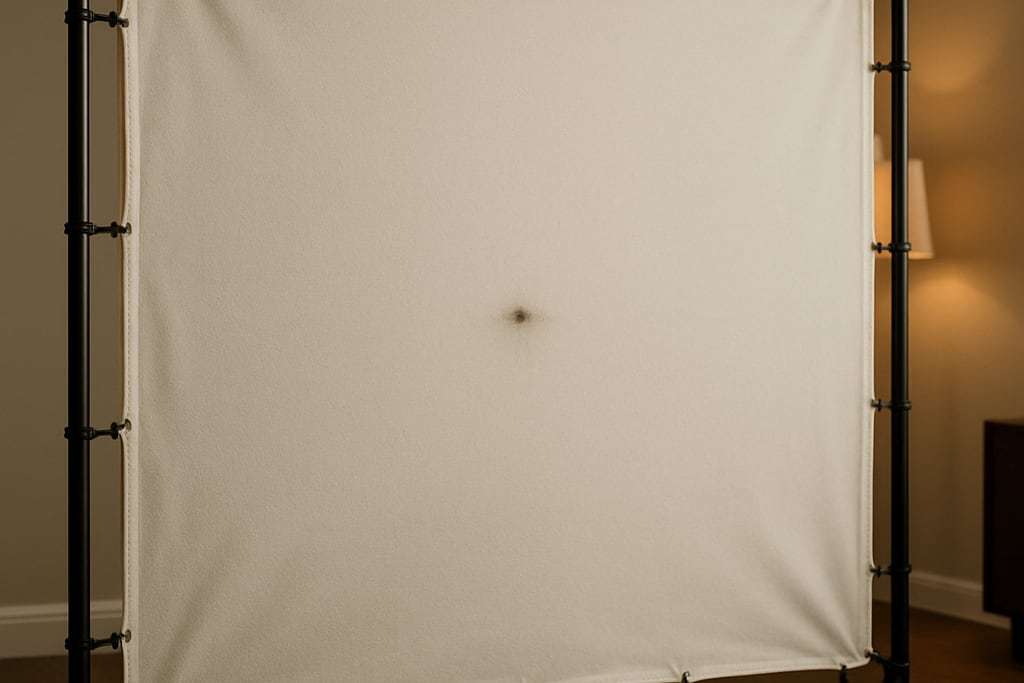
On wear, Carl’s Place says net walls wear out faster than impact screens. Its screens come in Standard, Preferred and Premium grades, and its Standard screen is listed to protect shots up to 250 mph. Burn marks are normal on screens, especially from high-spin shots, and commercial use wears them faster than home use.
Space
A net does not remove the need for ball-flight distance or swing clearance. Your ball still needs room between the mat and the net, and the swing still needs its clearance. Canvas Etc lists an enclosure minimum of 10 feet wide, 12 feet deep and 9 feet high, with the golfer standing at least 10 to 12 feet from the screen. Shop Indoor Golf says an enclosure should have at least about 10 feet of width with at least 6 inches of buffer each side. For the full dimensions, see our room size guide.
How to choose
A net is a good fit when:
- You mainly want numbers and practice.
- You want to be able to put everything away.
- Your budget is under about $2,000.
An enclosure with an impact screen is a good fit when:
- You want a projected course and want to play rounds.
- You have a dedicated room.
- You want side panels and a ceiling panel around the swing.
You can start with a net and add a screen later. Many of the monitors in our launch monitor guide work either way. If you decide to build the frame yourself, our DIY vs package comparison covers the trade-offs, and the enclosure picks list the kits.
Run the numbers
Price both routes in the cost calculator, and if you pick the enclosure, find the projector distance with the projector calculator. More head-to-head pages are in all comparisons.
Frequently asked questions
Can I use a projector with a hitting net?
Not directly. An impact screen absorbs the ball and also displays the projection, and a hitting net cannot show a projected image, according to Golf Geeks. With a net you normally watch a phone, tablet, monitor or TV.
Is a net or an enclosure safer?
Neither is safe by default, and you should measure your own swing and clear the area. Hard objects such as support pipes are the main rebound hazard, and soft coverings keep rebounds weak, according to one builder's forum thread. Carl's Place says foam behind the screen edge slows shots that hit the frame. Net vendors advise at least 1 foot of buffer behind and beside the net.
How much does a golf simulator net cost?
The SwingNet Pro XL 8 foot by 8 foot net is $599. Rain or Shine Golf's Garmin R10 and Rapsodo MLM2PRO practice bundles start at $1,599 with a net and mat included, and the Mevo Gen2 bundle starts at $2,149.
Do enclosures reduce noise?
Somewhat, according to the maker. Canvas Etc says its multilayer enclosure fabrics reduce impact noise by up to 15 dB compared with a basic hanging screen, which is the maker's own claim. There is no independent home measurement, so test noise before you build a permanent room.
Do nets or screens wear out faster?
Carl's Place says net walls wear out faster than impact screens, and recommends net wall extensions only as side walls. Burn marks on screens are normal, especially after high-spin shots. Check how a seller treats replacements before you buy.