The short answer
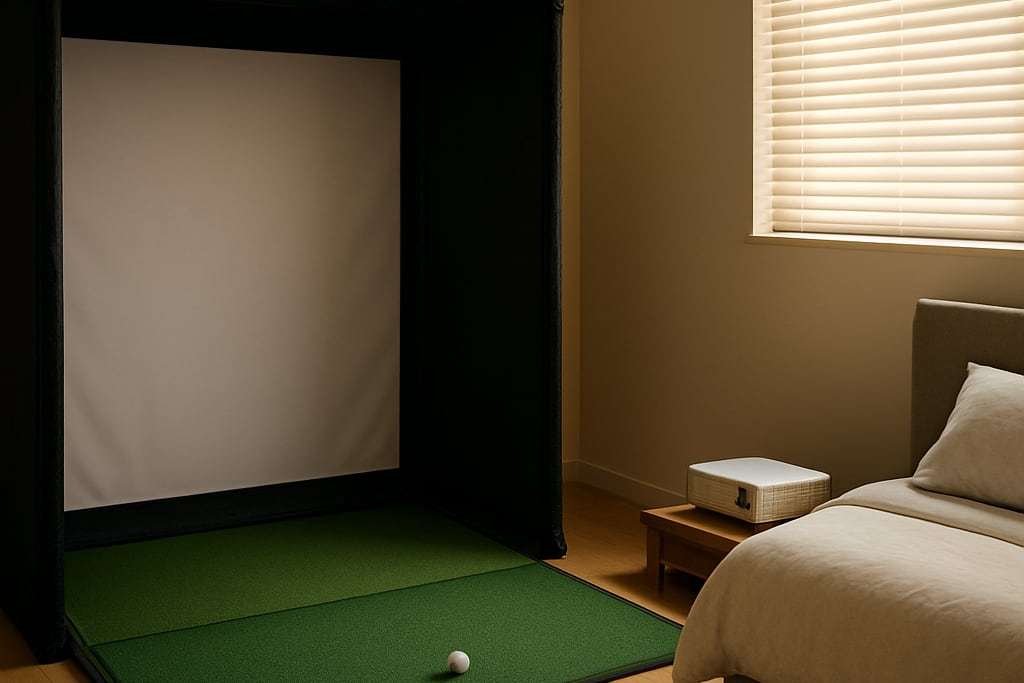
This calculator compares your height, longest club and room measurements with common simulator guidance and returns a pass, tight or short result for ceiling, width and depth. A comfortable target is about 10 ft high, 14 ft wide and 18 ft deep, and Shop Indoor Golf's minimums are 8 ft 6 in high, 10 ft wide and 15 ft deep.
Try it with your numbers
How to use the calculator
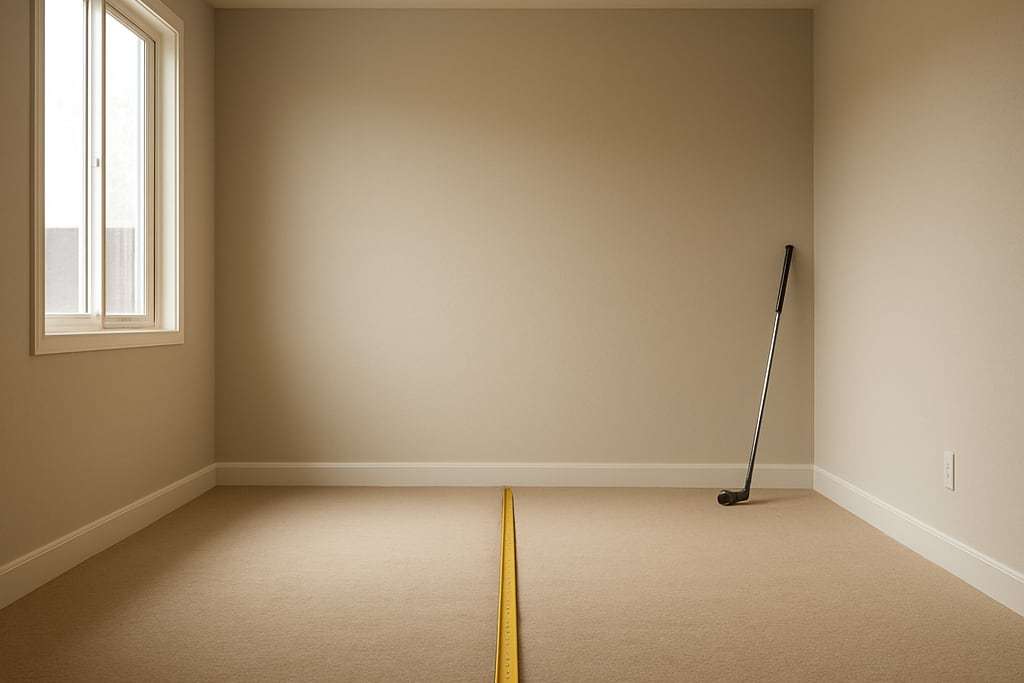
Fill in the golfer first: your height in inches and the length of the longest club you will swing. The club box starts at 45.5 inches, so change it to match yours. Then enter the room: ceiling height, width and depth from the front wall to the back wall, and whether you will stand in the middle or off to one side.
The result gives each dimension a pass, tight or short. The ceiling check uses your height plus club length as the comfortable minimum, with a tight band about 8 inches below it. The width check estimates the side room your swing needs, and the depth check passes at 15 feet or more, calls 12 to 15 feet tight and anything under 12 feet short, against a usual 15 to 20 feet. These are rules of thumb built into the page, not a standard, so read the result as a first screen, not a verdict.
What to measure first
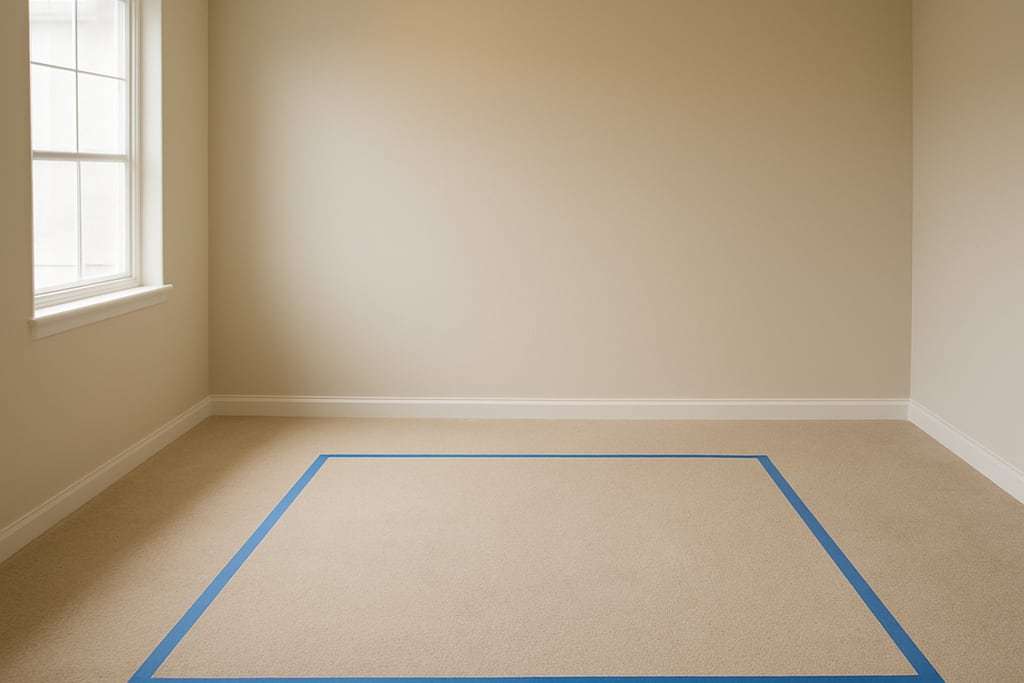
Bad inputs give a false pass, so spend a few minutes on the tape measure.
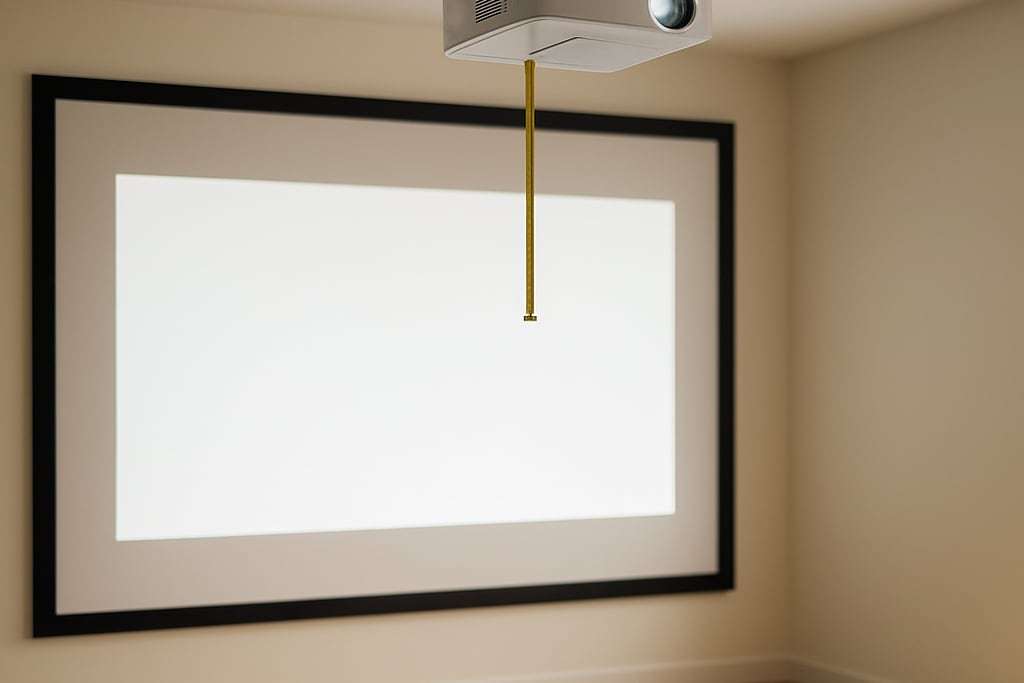
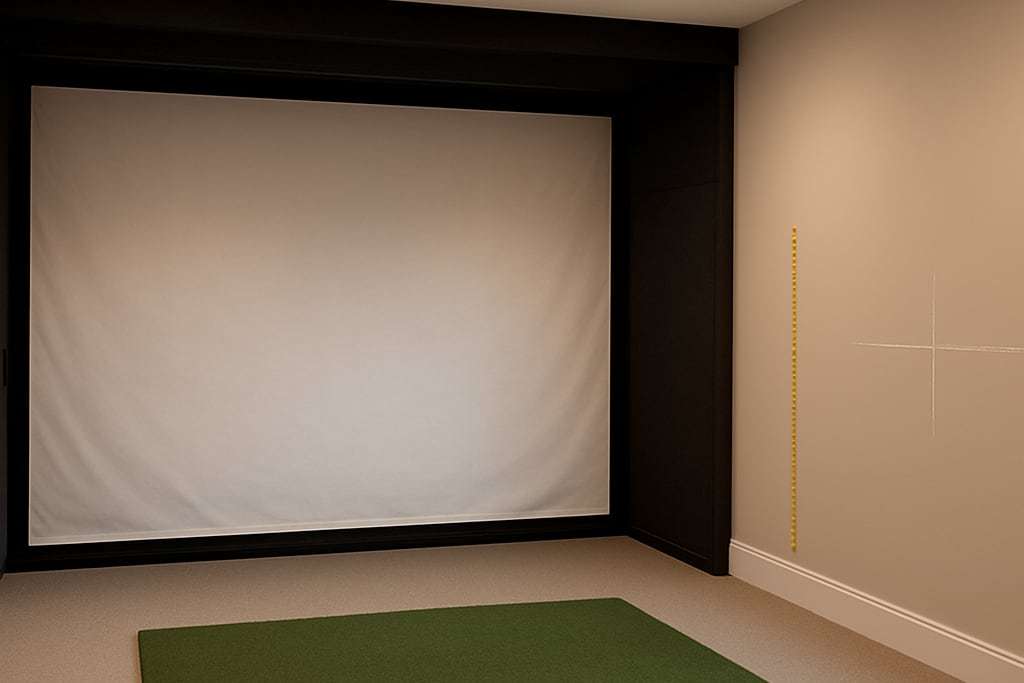
- Ceiling: measure at the hitting position, and to the lowest obstruction in the swing zone. Golfbays advises measuring three times.
- Width: measure at shoulder height from wall to wall.
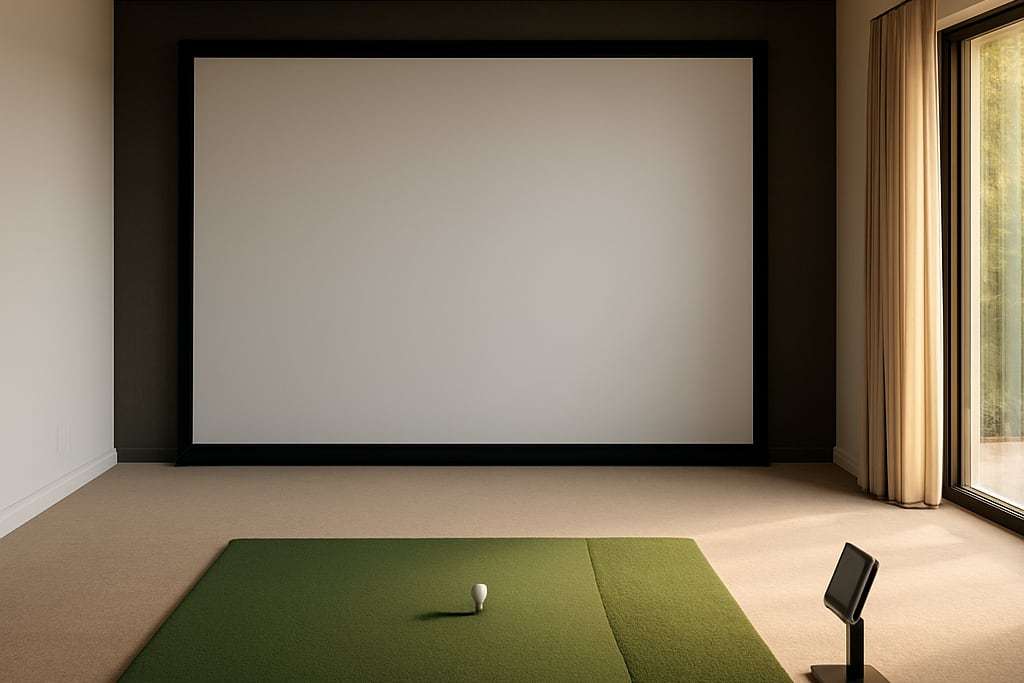
- Depth: measure from the back wall to where the screen would sit, plus the space behind the screen. Carl’s Place counts 1 ft behind the screen, 10 to 12 ft from screen to ball and 6 to 7 ft behind the tee.
- Mat height: add 2 to 3 inches, per Golfer’s Authority, and subtract it from the ceiling.
Numbers the calculator is checked against
These are retailer and maker figures, not independent tests. Shop Indoor Golf’s table is a good yardstick:
| Dimension | Minimum | Recommended | Ideal |
|---|---|---|---|
| Ceiling | 8 ft 6 in | 9 ft | 10 ft or more |
| Width | 10 ft | 12 ft | 14 ft or more |
| Depth | 15 ft | 16 ft | 18 ft or more |
Other makers differ. Rain or Shine Golf lists a basic setup at 12 ft wide, 9 ft high and 15 ft long, and TruGolf says 8 ft ceilings are not recommended for full swings. Rapsodo suggests roughly 10 ft high, 14 ft wide and 17 to 18 ft deep, adjusted for golfer height. For tall players, Golfer’s Authority gives about 10 ft for a golfer 6 ft to 6 ft 6 in and about 11 ft above that.
Reading a tight result
A tight ceiling means shorter clubs or a lower swing. Golfer’s Authority says an 8 ft ceiling is for irons only. A tight width usually means standing off center, which fits one handedness. Carl’s Place says a 10 ft room works with an offset hitting area, while a centered tee for left and right handed golfers needs about 14 ft. Our left and right handed guide explains the options.
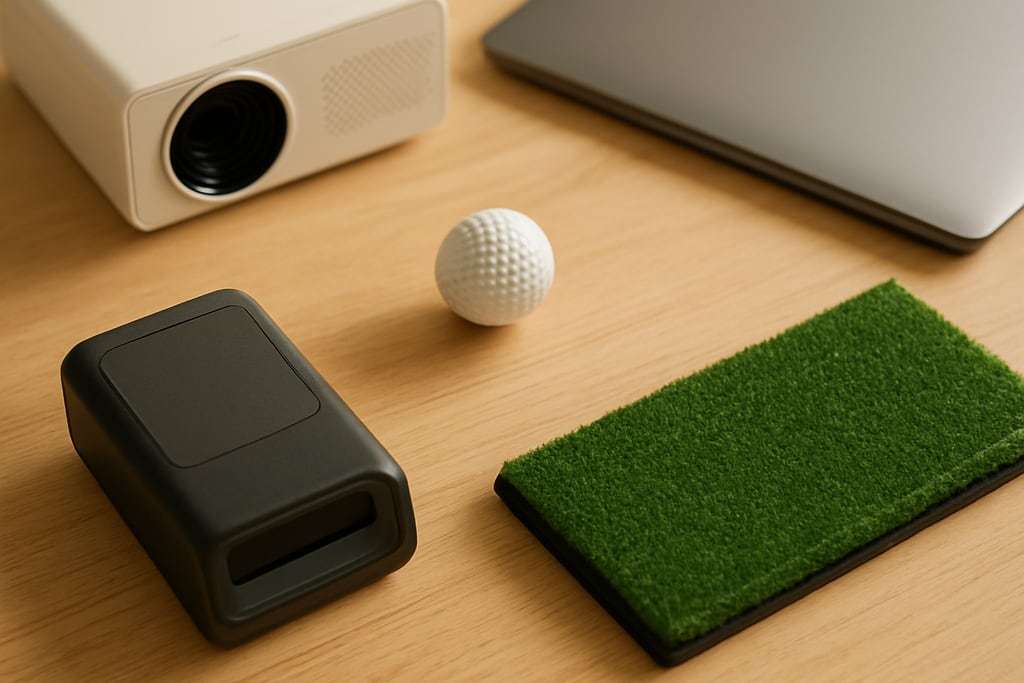
A tight depth can mean a camera monitor beside the ball instead of a radar unit behind it. The launch monitor tech comparison shows how the two differ. For very short rooms, see the small room picks.
What it does not check
The calculator does not know about beams, ducts, light fixtures or a garage door track, which is why you measure to the lowest obstruction yourself. It does not model a projector, an overhead monitor mount or side padding, and it does not tell you whether a setup is protected from rebound. A short result on one dimension may still be solved with a different layout, and a pass is not a promise.
The final test is physical. Take your longest club to the planned spot and make slow practice swings, and have someone watch where the clubhead goes. Rapsodo also suggests marking the club tip with chalk or tape at the top of the backswing and follow-through, then comparing it with the ceiling. Add 6 to 9 inches above your highest point.
Next steps
If the room passes, price the build with the cost calculator and size the projector with the projector calculator. The wider room size guide covers the full ranges in more depth.
Frequently asked questions
What should I measure for the ceiling?
Measure at the hitting position, not at the wall, and measure to the lowest thing in the swing zone: a beam, duct, light, garage door track or sprinkler pipe. Carl's Place and Golfbays both stress mapping the lowest obstruction, not only the ceiling surface.
Why does the calculator ask for my longest club?
The longest club sets the ceiling and the width you need, so the calculator uses its length. Carl's Place says to test with your longest club, usually the driver, because a swing that clears with a wedge can hit a fixture with a driver.
My room says tight. Is it a no?
Not automatically. Tight means a compromise, such as shorter clubs, one handedness or a smaller screen. Make slow practice swings with your longest club and a helper watching the clubhead, and decide from your own swing, not from a number.
How much depth does a launch monitor need?
It depends on the type. Shop Indoor Golf's table shows camera monitors beside the ball in rooms about 15 to 16 ft deep, and radar units behind the golfer in rooms 16 to 19 ft deep. The calculator only checks total depth against 15 to 20 ft, so match the monitor to the result.
Does the result cover safety?
No. It checks whether the room is big enough, not whether it is protected. Rebound, ceiling strikes and side clearance are real risks, so measure your own swing and add padding where a stray ball could land.